
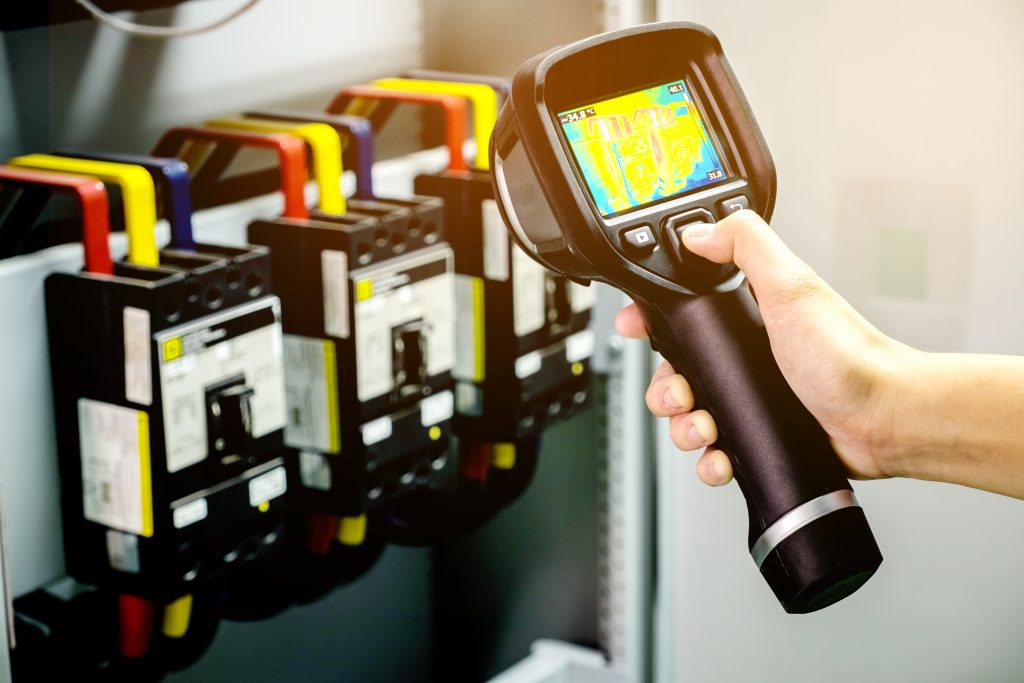
Catch Electrical Faults Early with Thermal Imaging

Thermal imaging is a non-destructive preventative maintenance check that turns invisible heat into a visible, colour-coded image. It lets you repair equipment on your terms, rather than waiting for an emergency breakdown, often at a premium cost.

The examples below show how thermal imaging identifies faults early, preventing downtime and improving site efficiency and reliability.

  • Loose or overtightened electrical connections can potentially start fires
  • Electrical equipment (contactors, batteries, etc) emitting more heat than usual can be an early indicator of equipment failure
  • Motor or pump rotors emitting excessive heat can indicate misalignment/bearing failure/over or under-lubrication
  • Thermal imaging can also assist in identifying cold air escaping from refrigeration systems such as cold rooms, which can improve efficiency and save you money
  • Regular thermal imaging can potentially reduce your insurance premiums; we recommend contacting your insurance company for their specific requirements
  • Identify underperforming or faulty solar panels by identifying low thermal patterns within each solar panel

Electrical Maintenance Bundaberg are qualified level 1 thermographers and specialise in electrical and mechanical thermal imaging and analysis. Please contact us today on how we can assist your maintenance program.

Who Needs Thermal Imaging?

Thermal imaging suits any site where an electrical fault would be costly to miss: factories, food storage and cold rooms, aged care facilities, and commercial switchboards. It’s also useful for homeowners with a solar system who want to confirm every panel is actually pulling its weight.

What Happens During an Inspection

We scan your switchboard, equipment or solar array with a thermal camera while everything is running under normal load. Any unusual heat pattern is recorded and explained in plain terms, along with what we’d recommend doing about it.

Why a Level 1 Thermographer Matters

A Level 1 thermography qualification means faults are read correctly, not just photographed. Misreading a thermal image can mean missing a real fault, or flagging a problem that isn’t actually there.

Why Choose EMB for Thermal Imaging

Frequently Asked Questions

How often should a switchboard be thermally scanned?

This depends on your site and equipment load, and your insurer may have their own requirement. We can recommend a sensible schedule once we know your setup.

Yes. A panel producing less power than it should often shows a different thermal pattern to the panels around it, which we can identify during a scan.
No. Thermal imaging is non-destructive and is done while equipment is running under normal load, so there’s no need to interrupt operations to carry it out.
It can, depending on your insurer’s requirements for preventative maintenance. We recommend checking with your insurance company directly for their specific criteria.
We explain what was found and what we’d recommend doing about it, in plain terms rather than just handing over a folder of images. From there, repairs can be scheduled on your terms rather than as an emergency.

Book a Thermal Imaging Inspection Today

Whether it’s a switchboard, motor, cold room or solar array, EMB’s qualified thermographers can help you catch faults before they become expensive.